When the World Changes But Your Strategy Doesn't
What the international aid crisis reveals about why organizations struggle to act on risks they can see coming.
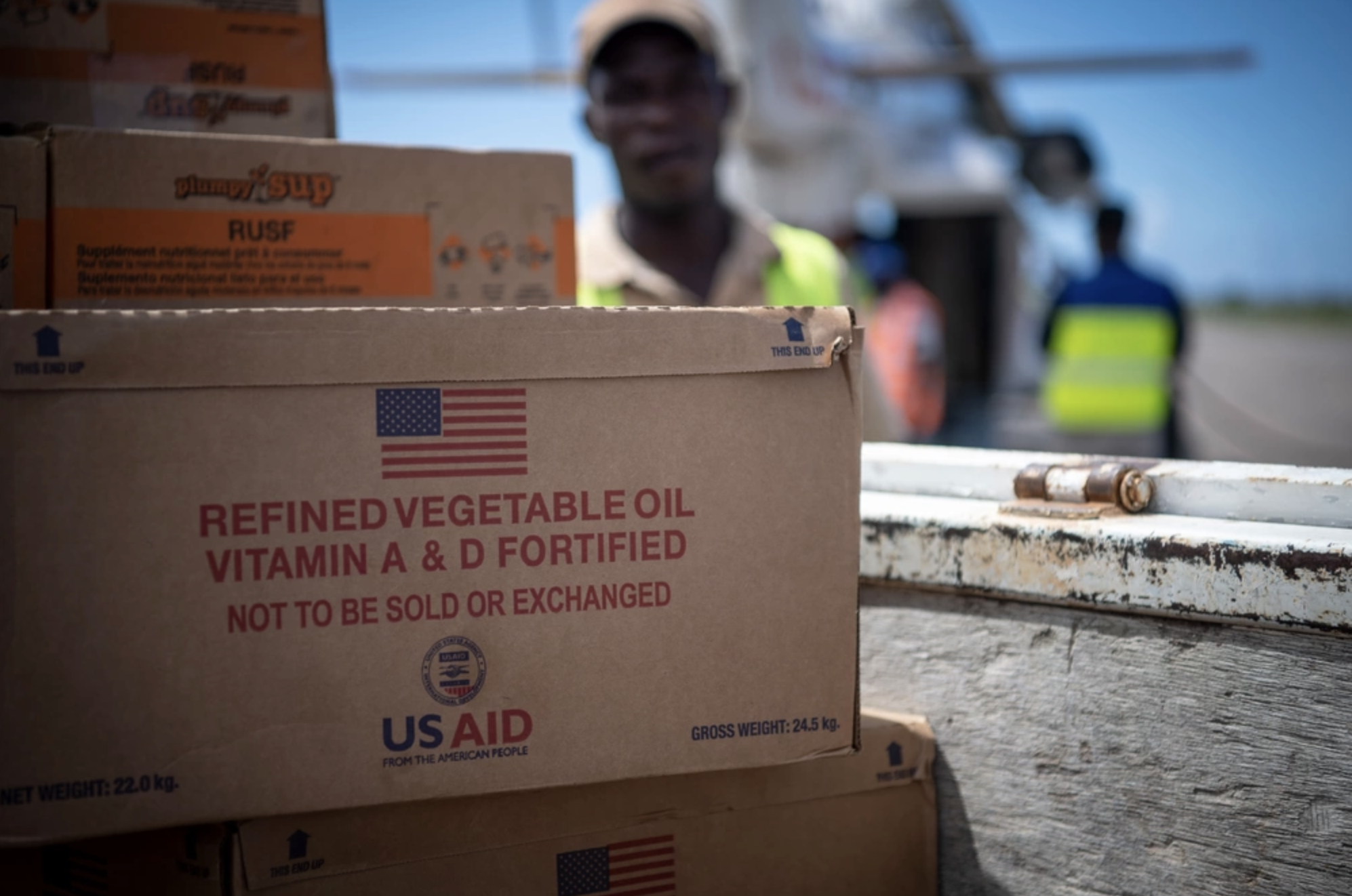
The international aid sector has experienced an extraordinary upheaval over the past two years. Government funding has been slashed, longstanding programs shuttered, and thousands of people have lost their jobs. For organizations that depended heavily on Western government donors, the consequences have been devastating. Most of the commentary I've read focuses on the speed and severity of the cuts, particularly those associated with the Trump administration's dismantling of USAID.
But here's what makes this crisis particularly interesting to me: much of it was foreseeable.
The first Trump administration proposed cutting State Department and USAID funding by roughly a third back in 2017. Congress rejected those cuts, but the administration's intentions were clear. Project 2025 subsequently laid out plans for a sweeping restructuring of USAID. Meanwhile, the UK had already begun reducing its foreign aid commitments, and political support for international assistance was becoming increasingly fragile across Western governments. None of this meant the precise timing or severity of the eventual cuts was predictable, but the possibility of a major contraction was hardly unimaginable.
Years ago, Michele Wucker coined the term gray rhino to describe exactly this kind of threat: something large, dangerous, and plainly visible that organizations nevertheless struggle to confront. Unlike a black swan, which catches everyone by surprise, a gray rhino gives you plenty of warning. Wucker also described what she called a meta rhino, the organizational habits and incentives that prevent institutions from responding even when they recognize the danger.
I've been thinking about this distinction while preparing a philanthropic grant proposal for Cultivate. We don't work directly in international aid, but the underlying problem is one we've encountered repeatedly in our work with intelligence agencies and other institutions. Organizations make consequential decisions based on assumptions about how the future might unfold, but they rarely have a reliable way to revisit those assumptions as circumstances change. The result is that a strategy can become increasingly disconnected from reality without anyone formally deciding to change it.
The Problem With Strategies That Don't Change
Consider the position of an international aid organization that receives most of its funding from one or two government donors. Its leadership almost certainly understands the risk of that concentration. It's not unlike a small business that depends on a handful of major customers. Losing even one could threaten the entire organization.
But recognizing the risk and doing something about it are very different things. Diversifying revenue takes years, building reserves means spending less on programs today, and reducing dependence on a major donor can be politically awkward when that donor is still providing substantial funding. There are perfectly understandable reasons to continue operating as before, particularly when the alternative means making painful decisions based on something that might never happen.
This is where the meta rhino becomes especially relevant. The problem isn't necessarily that leaders are unaware of the danger. In fact, a 2023 survey of NGO executives by InterAction found that many were already pursuing revenue diversification. The harder question is whether that awareness translated into meaningful changes to their organizations' commitments, operating models, and contingency plans. For some, it undoubtedly did. Others may have had few viable alternatives. But the broader institutional challenge remains: how do you translate a growing concern about the future into decisions that have real consequences today?
In our work, we use the term analytic drift to describe a related phenomenon. A judgment is made based on the best available evidence, but over time the world changes while the original assessment remains largely intact. The same thing happens with strategy. A leadership team approves a three-year plan based on assumptions about funding, political stability, technology, or market conditions. Six months later, some of those assumptions have weakened, but the plan continues. Another six months pass, and the gap between the strategy and the world it was designed for grows wider.
The annual strategy retreat or quarterly board meeting may eventually surface the problem, but by then the organization may have already made commitments that are difficult or expensive to reverse.
Better Forecasts Aren't Enough
I've spent much of my career working on ways to improve how organizations think about the future. Cultivate Labs ran the U.S. intelligence community's internal prediction market for more than a decade, and we've since developed increasingly sophisticated approaches to combining human judgment, structured analysis, and AI forecasting with Hinsley.
In fact, I wrote about gray rhinos back in 2023, arguing that better forecasting could help organizations recognize and prepare for obvious threats. I still believe that, but my thinking has evolved. Producing a more accurate forecast is only part of the problem, and perhaps not even the hardest part.
Imagine that an aid organization's leadership had received a credible assessment in early 2024 showing a 40% probability of a severe funding contraction over the following two years. Would that have changed anything? Perhaps. But someone would still have needed to decide whether that probability justified slowing hiring, building reserves, reducing program commitments, or developing alternative funding arrangements. Those decisions involve real costs, competing priorities, and political consequences. Are you going to be the one pulling the chain to stop the line? A forecast, no matter how accurate, doesn't make that any easier.
What organizations need is a way to connect changing assessments of the future to the decisions they're making in the present dispassionately. Rather than treating strategy as a document that's periodically revisited, they need a process that continuously tests the assumptions behind their major commitments and gives leadership a reason to reconsider those commitments when the evidence changes.
That's the problem we're increasingly focused on solving with Hinsley.
What a Living Strategy Could Look Like
Consider an aid organization preparing its next three-year strategic plan. Sixty percent of its funding comes from a single government donor, and leadership is considering expanding into several new countries. Under a traditional planning process, the organization might acknowledge donor concentration as a major risk, include a few mitigation measures in its plan, and revisit the issue at its next board meeting.
A different approach would begin by making the organization's assumptions about future funding explicit. Leadership might identify three plausible scenarios: continued funding at roughly current levels, a gradual reduction, or a severe contraction. It would then identify the political, fiscal, and institutional developments that would make each scenario more or less likely.
This is where a system like Hinsley comes in. AI research agents can continuously monitor relevant developments, generate forecasts about specific indicators, and update the probabilities of different scenarios. Human experts contribute information and judgment that public reporting might miss, while the system maintains a transparent record of the assumptions behind the analysis. Rather than receiving a static risk assessment once a year, leadership has a continuously updated view of how the outlook is changing.
But the most important step comes next. Suppose leadership agrees in advance that if the probability of a severe funding contraction rises above 40%, it will formally reconsider hiring plans, reserve targets, and new program commitments. That threshold doesn't mean the organization automatically freezes hiring or abandons its expansion. It means the evidence has changed enough to require a deliberate decision, while there is still time to do something about it.
This may sound like a relatively small procedural change, but I think it's potentially profound. One of the reasons organizations struggle to confront obvious threats is that challenging an existing strategy can be personally and politically difficult. Someone has to raise the alarm, question earlier decisions, and persuade colleagues that circumstances have changed. A continuously updated, shared assessment doesn't eliminate those disagreements, but it makes them less dependent on the willingness of an individual to challenge the prevailing view. The organization has already agreed on what developments warrant another conversation.
There's another benefit that becomes increasingly important over time. The system can preserve not just the forecasts, but the reasoning behind strategic decisions, the assumptions leadership accepted, and the evidence that eventually supported or contradicted those assumptions. When executives leave or teams reorganize, that institutional memory doesn't disappear with them. And when the next major decision arises, the organization has an opportunity to learn from its previous judgments rather than starting from scratch.
None of this means handing strategic decisions over to AI. Quite the opposite. AI is particularly well suited to continuously monitoring information, identifying changes, and maintaining a record of evolving evidence. Humans remain responsible for deciding which outcomes matter, how much risk to accept, and what actions to take. The objective is to make those human decisions better informed, more timely, and more accountable.
Preparing for the Next Gray Rhino
It's easy to look back at the international aid crisis and identify warning signs that seem obvious in hindsight. It's much harder to know what an organization should have done differently at the time, particularly when the costs of preparing for a potential crisis were immediate and the consequences remained uncertain. I don't think the lesson is that aid organizations should simply have predicted the future better.
The more useful lesson extends well beyond international aid. Every organization operates on assumptions about the future, whether those concern government funding, customer demand, geopolitical stability, or technological change. Some of those assumptions will inevitably turn out to be wrong. The question is whether the organization has a reliable way to recognize that they're becoming less credible and reconsider its decisions before its options disappear.
That's ultimately what I think continuous foresight should make possible. Not simply better predictions, or another dashboard for executives to consult, but a way for institutions to keep their strategies connected to a changing world.
The next gray rhino is probably already visible somewhere on your organization's horizon. The question is whether you'll recognize when it's time to move.